
How to Become Your Members’ First Choice

Member Value Proposition

Are You Your Members’ First Choice?

Do most of your members belong to other associations? If they had to pick one, would it be you? If the answer is no, you may be a second society. Members’ first choice will always be the organization with the member value proposition most closely aligned with what they do for a living, where they can find the resources and experiences specific to their field—the one they must belong to do their job well.

The Struggles of a Second Society

The first challenge is that you are optional, so you must make an excellent case for membership. Moreover, you are one of many options. You may be the third, fourth, or even lower choice. People have limited time and money to invest in membership, and you must compete for them. And when times get tough, you are at the top of the list to drop. When the boss stops paying, or the paycheck stops stretching, you are a much easier “no” than their number one choice. This shows up as low retention or cyclical membership that booms and busts with the economy.

Too Much and Too Much of the Same

Members choose their first society because it meets their professional needs so well. Most of what they need to do their job, they get there. The member value proposition could not be more clear. They join second societies to fill in gaps in their sub-specialties, interests, and networks. But is that member value proposition clear?

The answer often is no, for two reasons: First, they often do many of the same things primary associations do, only less well. Primary societies are deep and focused. They concentrate their resources on serving the core professional needs of their members. Second societies cannot beat them at their own game, but they all too often try.

The second reason is that they try to do too much. They want to meet as many of their members’ needs as possible, but so does everyone else in their space; so many weak offerings overlap and fail to inspire people to choose them.

When the boss stops paying, or the paycheck stops stretching, you are a much easier “no” than their number one choice.

The Vacation Home Analogy

Second societies are like vacation homes. No one needs a reason to stay home this weekend, but they need a reason to make the trip to the lake house. It needs something pretty special you can’t get at home or by going to a hotel. A great vacation home fills a white space in your life. You go there to get something you don’t get someplace else. It doesn’t have everything, but what it does have is special. Not to torture the analogy, but a great vacation home has the right to win your free time.

Your Right to Win

So, how do you get the right to win? Wee Willie Keeler, one of the best baseball hitters ever, said it best: “Keep your eyes clear and hit ‘em where they ain’t.” In other words, find the white space and offer something your competitors can’t. A lot of what you do may overlap with others. Ask yourself what doesn’t. What can you do that others in your space cannot?

For example, one Sequence client was focused on urban development, a space with professionals from many walks of life: developers, investors, urban planners, and so on. Many members belonged to nine or more associations to meet their professional needs. So where was the white space? It became clear that this association was the only place all those different people could come together to solve problems. They alone could convene those kinds of curated, trusted environments, so much that their most exclusive work groups cost thousands of dollars, which members line up to pay.

A lot of what you do may overlap with others. Ask yourself what doesn’t. What can you do that others in your space cannot?

Another Sequence client was in the food space, serving scientists and technicians from dozens of different disciplines, who, on average, belonged to four or more associations. They found their right to win in the space between all those scientific fields. They could provide connections, community, and trusted information that cut across the entire industry, something members needed badly, and no one else could provide. This allowed them to double down on the white space and stop doing things other societies did better that had little value for the organization.

Conclusion: A Winning Member Value Proposition

Successful organizations embrace their not-first-choice position and go all-in on well-defined spaces where they have a clear right to win. The key to finding that winning member value proposition is understanding what your members need that no one else is giving them and meeting it in a way only you can. If you become world-class at doing that, your association will thrive.

Ready to See What's Next for Your Association?

We help associations achieve results that last — from tripling growth to transforming revenue.

Have questions before we talk? Ask us here.

Can Your Association Prove Its Value?

4 Key Metrics Associations Should Track To Measure Roi
Author: Kristen Wall

Between funding member benefits, new programs, and various marketing initiatives, it takes a significant investment to further your association’s offerings. You can only hope this investment will yield higher member engagement—but how can you know for sure?

Your association’s return on investment (ROI) demonstrates the value derived from each of its expenses. This calculation enables you to make informed financial decisions, set appropriate prices for membership tiers, and justify each of its investments. Ultimately, your association’s ROI can shape its future strategies.

Let’s review the metrics your association should track to measure its ROI.

1. Member Engagement

Engagement levels indicate members’ satisfaction with your offerings. This information allows your association to assess which offerings are worth investing in and where your resources will be best spent. 

However, as Tradewing’s member engagement guide explains, this includes all the ways members interact with your association. Your association must consider numerous forms of engagement—from attending your events to sharing your social media posts.

In other words, your association won’t measure member engagement with one simple formula. Instead, there are a few factors you can track to assess engagement, including:

  • eLearning participation. Determine how engaged members are in your association’s eLearning content. Use an association LMS (learning management system) with reporting and analytics features to track key metrics associated with course performance, such as learner progress and course completion.
  • Event attendance. Do all event registrants follow through with attendance? What percentage of your overall member population participates in events? Use these insights to determine which events yield the most engagement.
  • Email open rates. Tracking members’ responsiveness to your communications can reveal how receptive they are to your messages. You may find that certain email subject lines more effectively garner member attention, or perhaps members are more interested in webinar announcements than your weekly newsletter.

For a comprehensive view of members’ interactions, list all the engagement opportunities your association offers. This list should include everything from liking your social media posts to signing up for your eLearning courses. While no level of engagement is unimportant, this detailed view can also help you meet members where they’re at and develop strategies to increase their engagement.

2. Member Retention Rate

Highly engaged members are more likely to renew their membership to continue reaping the benefits of their involvement with your association. That’s why knowing your member retention rate is critical to delivering the most appealing offerings to your members. 


For example, you might conclude that your events receive high levels of participation and boost engagement. Then, you can focus your efforts on developing and promoting more events to increase member retention rates.


High member retention can help your organization maximize its ROI because:


  • Member retention is more cost effective than acquisition. In other words, you can allocate fewer resources to recruitment efforts and instead rely on steady membership numbers. 
  • Membership renewals offer a consistent revenue stream for your association. With a recurring source of income, your association can cover its operating expenses and even invest in new projects without constantly fundraising.
  • High retention strengthens your association’s community. An active community drives further participation from existing members and can even reach new members by word-of-mouth, allowing your association to grow with minimal investment in recruitment efforts.


Your member retention rate is the percentage of individuals who renew their memberships in a given period. To calculate this percentage, divide the number of renewed members by the number of total members from the previous period, then multiply your answer by 100. 

3. Learning Outcomes

Among the top three reasons members join an association, continuing education opportunities and accessing specialized information are primary drivers. As such, your association must deliver the eLearning content and other educational resources that meet members’ needs. After all, your association needs a compelling value proposition to stand out from the crowd—helping members achieve their goals is a surefire way to make your organization their first choice!

Track learning outcomes to ensure you invest in the offerings that drive members’ personal or professional development goals. This metric evaluates whether learners achieve the intended objective of your courses and helps your association determine whether the content effectively imparts valuable knowledge.

Gather relevant information about learning outcomes from:

  • Course assessments, which test learners’ knowledge before, during, or after a course
  • Certification exams, which allow learners to earn verifiable credentials after completing a course
  • Member surveys, which directly ask members for their opinions and feedback surrounding your learning content

The best way to track this data (and tweak your offerings as needed) is through an LMS with robust reporting and analytics capabilities. According to Blue Sky eLearn’s rundown of LMS features, top-of-the-line solutions enable associations to create custom reports with multiple views. This way, your team can analyze data in a way that makes the most sense for your organization’s unique needs and preferences.

4. Revenue Per Member

Regardless of your association’s membership model, each member contributes to the organization’s financial sustainability in some way. By calculating the revenue earned from each member, you can see the direct financial return on your investment in their membership.


Calculate revenue per member by dividing your total revenue by the number of active members (including membership dues and non-dues revenue, such as event fees, course purchases, and other payments). The higher the revenue you receive from each member, the more you’ll be able to invest in your offerings and the tools needed to deliver them.


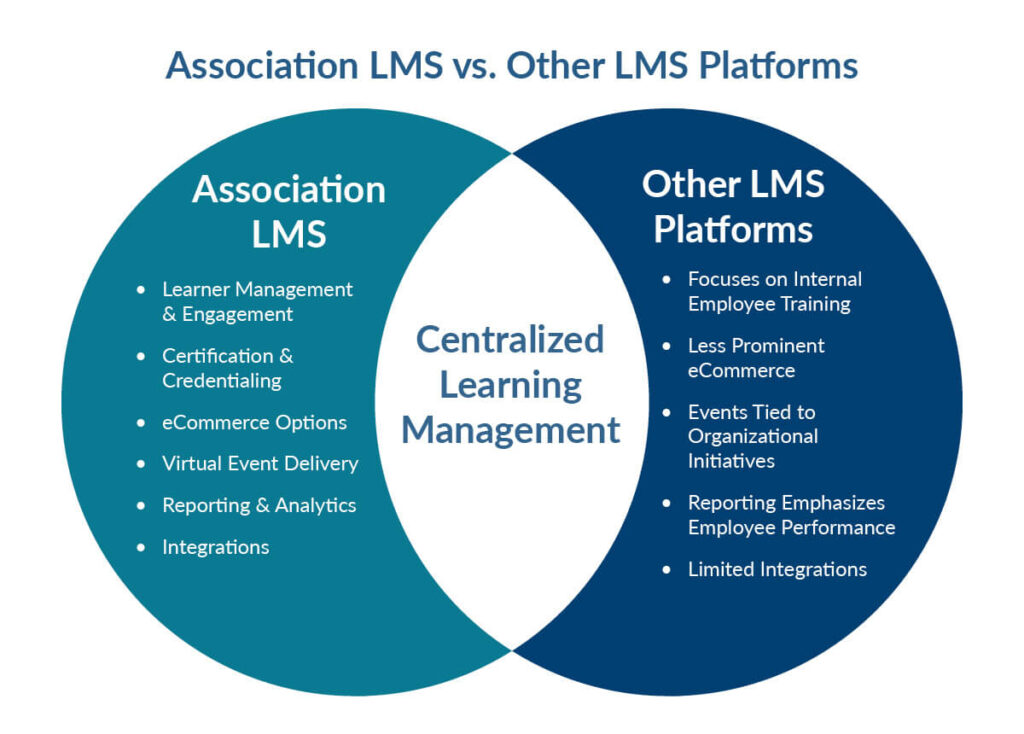
This is one reason that implementing association-specific software is vital to maximizing ROI. Only platforms purpose-built for associations have the tools needed to promote member-specific offerings, collect members’ payments, and track your association’s revenue. For example, consider how an LMS built for associations stacks up against generic platforms.


4 Key Metrics Associations Should Track To Measure Roi 2

An association LMS offers:

  • Learner management and engagement tools. With the right tools to manage learning experiences, your association can track members’ interests and tailor its offerings to meet them. As a result, you’ll drive higher member engagement and retention.
  • Certification and credentialing. As mentioned above, certification programs can increase the perceived value of membership. An LMS that offers these capabilities can help your association increase the value of its membership, and thus, revenue per member.
  • eCommerce options. Your associations can sell eLearning content and additional resources easily through a platform designed to increase non-dues revenue.
  • Virtual event delivery. A platform meant for associations can facilitate ticket sales, sponsorship opportunities, and other key components of your event-related revenue.
  • Reporting and analytics. Your association must be able to track the performance of its offerings to determine how you can optimize your revenue streams. Reporting tools allow you to do just that!
  • Integrations. Integrating your LMS with other association-specific platforms, like association management software (AMS), is essential to facilitating broader service offerings and seamlessly tracking your finances.

In contrast, generic platforms are restricted in their learning content, eCommerce options, integrations, and reporting capabilities. Instead, your association needs a tool meant specifically to track key ROI metrics and implement changes that help you maximize your return.

Your association needs a thoughtful approach when maximizing the return you receive on your investment in member recruitment and retention. By analyzing different aspects of your organization, you can determine your current ROI and identify areas for improvement. 

Keep in mind that monitoring these metrics should be an ongoing process—members’ wants and needs will change, and so should your association’s engagement strategies!

Ready to See What's Next for Your Association?

We help associations achieve results that last — from tripling growth to transforming revenue.
Have questions before we talk? Ask us here.

Is Your Member Segmentation Wrong?

Member Segmentation Is It Limiting Your Success

This article originally appeared in Sidecar as Is Your Member Segmentation Strategy Wrong?

Most associations segment their membership in the same way: by career stage. So young professionals might be one segment, mid-career folks another, and so on into retirement. They do it this way because it seems obvious and easy – but is there a chance it’s wrong?

When determining whether or not your member segmentation strategy is helping increase member engagement, ask yourself: Do our different segments act differently?

The Problem With Career-Stage Member Segmentation

If career stage has been the category used for your member segmentation, it’s likely been difficult to spot any trends or changes. For example, do mid-career and late-career members respond to different messages or engage with different things? They probably don’t.

Career-stage segmentation does not work because it doesn’t tell you how to treat people differently to get the best response – It is not actionable.

What you need to know is how your audience is different, which often falls into two distinct categories: what interests them and their relationship with you.

These groups were very distinct. For example, many physicians were not interested in advocacy, but those who were were highly passionate. So, talking about advocacy to the wrong people may have led to unsubscribes while talking about advocacy to the right people got an enormous response.

Segmenting By Interests

One of the most effective ways to segment your audience is by interests – after all, people will always respond better to things that interest them. Moreover, some things your association does are far more interesting to certain people than others. So how can you know which things and which people?

For starters, let your email be your guide. Cluster your email by topic and look at which members respond to what. You will begin to see patterns, and that’s where your member segmentation should start.

In an analysis we completed at Sequence for the American Medical Association, we found that there were four principal areas that physicians responded to:

Understanding Interests Through Action

How do you know what people belong in which segment? If you know what emails and content a member responds to, that will tell you. If you don’t, you can analyze your data for “look-alikes.” That is, members likely to respond to advocacy because they look like advocates in other ways. For example, they may open the same emails or visit the same pages. They may even have similar demographics.

Taking it one step further, an outside data shop can also help you use consumer data to segment non-members by interest. For example, the medical society in the story above doubled its member growth rate in this way.

The Loyalty Ladder

The other member segmentation strategy that always applies is how engaged your members are with you. Picture a ladder with your most engaged members on the top. These are your Super Fans. They are longtime members active in everything you do. They are your governance and volunteers. You wish every member were like them.

On the bottom are the unengaged. They joined but have not done anything. These are your Window Shoppers. In between are increasing levels of engagement. Members have more lifetime value at each level and become more likely to renew, so your goal is to move your members up the ladder.

Members at each rung of the ladder will react to different things. But, more importantly, you want them to respond to different things.

This approach allows you to concentrate your resources where they will do the most good and engage the members methodically to increase loyalty.

Don't Ignore Non-Members Either

You can also extend this approach to non-members. People come to your events, subscribe to publications, and contribute to journals – yet they aren’t members. More often than not, these non-member “constituents” make up a larger group than members.

For example, you can look at non-members who attended your event and infer their interests from what they did there or how they are similar to members whose interests you know. Once you have that information, your segmentation strategy can be to send more of those resources via email with a call to action to turn them into members.

Thinking about non-member interactions as rungs on the ladder allows you to walk them up to a membership.

Member Segmentation In Action

You do not have to choose between these approaches. Some of the most successful associations combine these segmentation strategies to attract new members and increase loyalty as effectively as possible. A winning acquisition and retention strategy allows interests to guide messaging and loyalty to inform offers.

It used to be that only the largest, data-savvy associations could achieve this kind of member segmentation. That is not true today. Better technology makes data analysis easier and cheaper every day, even in-house.

Could you be doing your member segmentation wrong? There is no reason not to start doing it right.

Ready to See What's Next for Your Association?

We help associations achieve results that last — from tripling growth to transforming revenue.

Have questions before we talk? Ask us here.

Stop Waiting for Members to Disengage

Proactive Member Engagement Feature
Author: Jeff Spring

Many membership organizations operate on a reactive model, tracking renewal rates to see who has already left or waiting for members to complain before addressing a problem. Waiting to fix issues leaves value on the table and risks member churn.


On the other hand, proactive engagement is a core part of a modern strategic plan. It’s the process of building a journey that prevents those problems from happening in the first place. It’s the difference between sending a “we miss you” email to a lapsed member and providing so much consistent value that the member would not dream of leaving.


The key to sustainable member growth and retention is shifting from a reactive to a proactive mindset. This requires you to stop making assumptions about what members want and instead build systems to understand them better. This strategy moves your organization toward a state of continuous performance improvement. Let’s explore actionable strategies to help you make that shift.

Systematically Monitor Member Needs

The first step to being proactive is to stop guessing what members want and start tracking what they actually do! Systematically monitoring members involves looking at their engagement data in your membership management system. This gives you a clear picture of what they find valuable and worth interacting with, allowing you to anticipate their needs.

Look for patterns in a variety of data points, including:

  • Email open and click-through rates
  • Event attendance and webinar registrations
  • Content downloads
  • Participation in professional development offerings
  • Community or forum participation

These patterns are your cue to act. For example, if new members engage heavily in their first month and then drop off, you can build a proactive check-in campaign for day 45. If a specific segment ignores your event announcements, you can test new topics or formats for them.

Use Surveys to Monitor and Anticipate Engagement

A large annual survey primarily measures past satisfaction. A proactive satisfaction survey helps you anticipate future member needs, too! Include forward-thinking questions in your annual survey, such as “What professional challenges are you expecting in the next six months?” or “What new topics do you most want to learn about?”


You can also send timely pulse surveys. For instance, send a short, two-question survey immediately after a member attends an event or downloads a report. Ask for their key takeaway or what they plan to do with the information.


This feedback is a goldmine for planning future content, events, and member benefits.

Personalize the Member Journey

True personalization means delivering the right content to the right member at the right time, not just referencing their name in a mass email to your entire contact list.

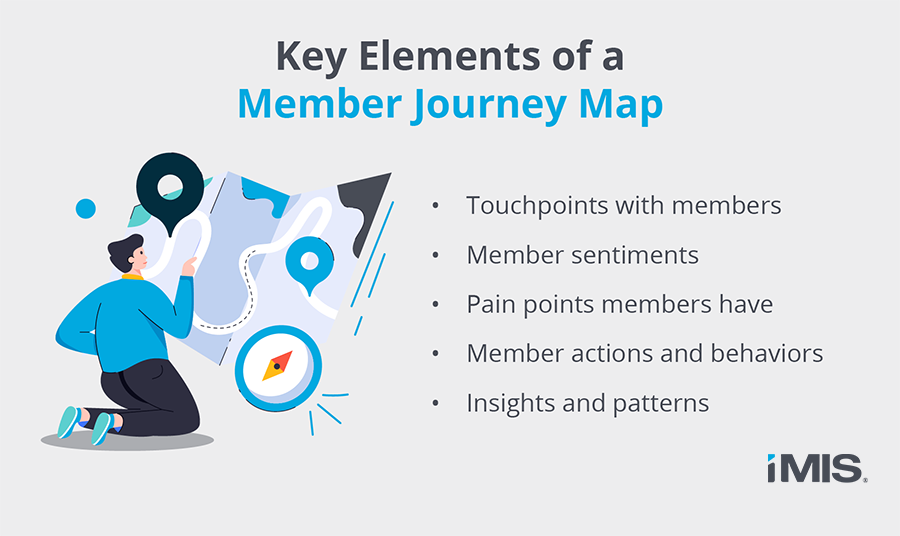
This is where member journey mapping comes in. This process plots out the member’s experience from their perspective, from their first day to their renewal date. Your map should identify:

Proactive Member Engagement Member Journey Map
    • Key touchpoints, including member-initiated interactions (like registering for events or participating in your online community) and organization-initiated interactions (like sending a renewal reminder or inviting them to an event).
    • Member sentiments, which are the emotions that members experience at each touchpoint.
    • Pain points that your members experience during their journey with your organization.
    • Actions that members take to achieve their goals, such as joining your organization or taking an online course.
    • Insights, such as patterns, process improvement opportunities, and gaps in the member experience.

Once you have this map, you can use segmentation to deliver a personalized experience at each stage. Your membership software is key for managing segments based on both who they are (like job role) and where they are in their journey.

Consider segmenting members by:

    • Career stage (student, early-career, mid-level, executive)
    • Declared interests or specialty
    • Committee or volunteer participation
    • Engagement level (highly engaged, at-risk, unengaged)

With segmentation, you can send targeted communications that match their current stage. For example, a brand-new member at the start of their journey needs a structured onboarding series. Meanwhile, a 10-year member would get more value from an invitation to mentor or join a leadership forum.

Proactively Improve Member Benefits

    • A reactive approach to your offerings is waiting for members to complain that they are stale. A proactive approach uses the data you are already gathering to guide your benefit strategy in real-time.


      Aim to find gaps in your value proposition. After all, only 11% of associations describe their value proposition as “very compelling,” and stronger benefits are the way to enhance your value.


      As you review your offerings, consider refreshing your member benefits with these ideas from iMIS’s guide to member engagement:

Proactive Member Engagement Benefits
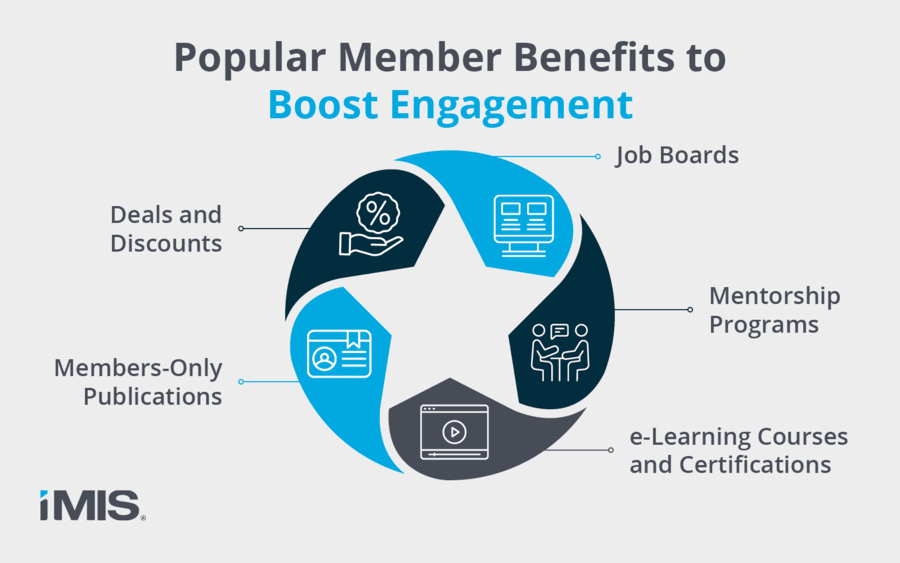
      • Job boards
      • Mentorship programs
      • e-Learning courses and certifications
      • Members-only publications
      • Industry-related deals and discounts

Proactively Improve Member Benefits

    • Leverage even more benefits from your engagement data and member segmentation by using them to automate outreach. In this context, a trigger is an automated rule that performs a specific action when a member’s data meets a preset condition. For example, a “join date” (the data) can trigger a “welcome email” or a “membership anniversary email” (the action). This system makes your data actionable, allowing you to engage members at the right time, at scale.

      Here are some examples of triggers you might create:

      • The “Welcome” Trigger: A new member joins, automatically triggering a 30-day automated onboarding email series.
      • The “Disengagement” Trigger: A member has not logged into the member portal, accessed your association’s mobile app, or opened an email in 45 days. This triggers a personal check-in email or a “here’s what you’ve missed” digest.
      • The “Milestone” Trigger: A member hits their five-year anniversary with your association, triggering a congratulatory note.

      Consider using different channels to trigger outreach. While email is common, you can also use text or, if you have one, your association’s mobile app. As Clowder’s guide to association apps explains, push notifications keep your association top of mind and deliver timely opportunities directly to your members.

      Some membership software also offers individual engagement scoring. This score automatically adjusts based on a member’s actions, such as attending events, participating in forums, or opening emails. You can then monitor your database to flag at-risk members long before they consider lapsing.

      You might even use engagement scores as a powerful condition for a trigger. If a member’s score drops below a certain threshold, you can automatically trigger a re-engagement campaign, flagging at-risk members long before they consider lapsing.

Final Thoughts on Proactive Member Engagement

    • Shifting from reactive to proactive engagement requires a fundamental change in your organization’s mindset. It moves your team from putting out fires to strategically building long-term association sustainability and member loyalty.


      As a result, you’ll transform your relationships into continuous, value-driven partnerships. Ultimately, a proactive strategy is the foundation for a healthy, growing association where members feel consistently understood and valued.

Ready to See What's Next for Your Association?

We help associations achieve results that last — from tripling growth to transforming revenue.

Have questions before we talk? Ask us here.

5 Game-Changing Strategies for Membership Marketing Success

Mastering Membership Marketing 5 Game Changing Breakthroughs You Need To Know

This article first appeared in Associations Now as “Five Breakthroughs in Membership Marketing

It's Time for a Breakthrough in Membership Marketing

Traditional membership marketing is predictably low return and has stayed the same for years. Most associations were slow to adopt email marketing when it came on the scene in the mid-90s. Today, 85% of associations use email, and 48% say it is one of their most productive channels.[mfn]2022 Membership Marketing Benchmarking Report,
Marketing General[/mfn] Still, click rates remain low, on average less than 2%.[mfn]Average Industry Rates for Email as of April 2023, Constant Contact[/mfn]

Many associations have delved into social and digital advertising but have failed. Only 14% say social media is effective, and 10% say the same of paid digital.

The good news is that membership marketers can expect a lot better. We have recently tested innovations in membership segmentation, targeting, messaging, and advertising that performed four to nine times better — in one case, twenty-seven times better — than the old-school tactics they replaced.

1. FOCUS ON YOUR "CUSTOMERS"

As I have written previously, your members are not your only customers. Your organization has relationships with many other people who interact with you differently. They attend your events, take your training, and write for your journals. One client calls them “ghost members,” people who are with you in spirit but not in membership.

It is a truism in marketing that your best prospect is the customer you already have. Why? On the one hand, they know you, so you don’t have to work hard to introduce yourself. This is even more important than you might think. Most associations have less than 35% awareness across their trade or profession.
Moreover, your customers see you as valuable in some way, so you don’t have to do so much to convince them. Most importantly, you know them. You know who they are and what they like, which is more than half the battle in marketing.

If true, your non-member customers should be your best membership prospects. But are they? We tested sending the same emails to a list of non-member customers and a rented email list of cold contacts. The emails sent to non-member customers performed 8.6X better than emails sent to cold lists. Not to mention, the rented list was expensive, and the customer list was free.

What does this tell you? First, you should be marketing membership to your non-member customers. But also, you should be actively cultivating your list of those customers by capturing opted-in emails at every touchpoint you can.

2. LAPSED MEMBERS CAN BE YOUR EASIEST NEW MEMBERS

In a previous article, I explained why lapsed members are an even more under-tapped audience. Most associations move on from members who don’t renew after a month or two. Some may try to win them back but then give up. This is often short-sighted. 

Lapsed members do ghost members one better: They not only know your organization, they know your membership experience and saw value in it when they joined. Members don’t lapse because they hate you. They lapse because they don’t see your value at that moment. 

Are lapsed members a lost cause, or can you remind them of your value and bring them back again?

At the American Lung Association (ALA), 75% of their donor file had been dormant for as long as two years. Historically, ALA had forgotten about them and focused all their efforts on finding new donors.

We helped ALA develop an email campaign that built on what ALA knew about these donors, namely, what they cared about. Of all ALA’s great work, people gravitate to four significant issues: clean air, lung health, and smoking cessation. They sent messages that spoke to lapsed donors about what they cared about – and only what they cared about – inviting them to be part of the solution again.

The result? In one year, they reactivated 7% of their lapsed members. In two years, ALA grew their donor file by 50% — over 600K active donors – by focusing on long-forgotten lost causes.

3. SEGMENT BY INTERESTS

A significant reason for ALA’s success was segmentation by interest. Sending clean air messaging to people they knew to care about clean air was many times more effective than their old, unfocused messaging. As we have found before, organizations do not segment their messaging or segment based on career stage or employment setting, which is seldom effective.

In another powerful example, we helped American Medical Association (AMA) analyze their member data to arrive at four interest-based segments: Advocacy, Practice Improvement, Patient Outcomes, and Medical Education. Segmenting their marketing this way helped triple their member growth in one year.

This is one way targeting your customers and lapsed members can pay off big. Because you know their interests, you can segment them effectively. In our most recent test, a leading engineering society used data they had collected on “ghost” members to identify the specific technical interests of their prospects. It tested interest-based messaging against their standard “generic” messaging. The interest-specific messages performed four times better than the generic ones.

4. Make EMAIL PERSONAL AGAIn

Email is the mainstay of many membership marketing programs, but it has become less effective as people have tuned email out. Of the nearly 145 billion emails sent daily, 84% are considered spam. A full 54% of email users delete or ignore spam.[mfn]What Percentage of Email is Spam In 2023?, Earthweb[/mfn]  You don’t think your membership emails are spam, but your prospects probably do because it looks like commercial email.

People like personal email, however, and a more personal approach to membership email can be far more effective. In another recent test, we sent a series of emails to prospective members that appeared to come from a well-known member of the society (with their permission, of course). The subject line was personalized, and the body of the email was a short, personal invitation to join the organization.

This straightforward approach has powerful results when done correctly. In our test, people clicked through personal emails twenty-seven times more often than impersonal messages and enrolled five times more often.

5. take another look at digital

At the beginning of this article, I pointed out that most associations need better results from digital advertising. Traditional banner and search ads are expensive, and the results could be better. Newer, less conventional advertising can be far more effective when correctly integrated with email campaigns.

All major digital advertising platforms (Google, LinkedIn, Meta) can target custom audiences. That is, provide them with a list of individuals you want to reach and advertise only to them. Because it is so targeted, it is a far more efficient way to advertise. We have found that the most effective way to use custom audiences is to support your email campaigns.

Using this approach, prospects who receive your emails are exposed to your digital ads simultaneously. The ads increase awareness and offer another way to respond, improving the success of your campaign.

In one recent test, we created a custom audience on LinkedIn comprised of prospective members identified using the tactics discussed above. These individuals received membership marketing emails and were exposed to LinkedIn ads simultaneously.

The emails with digital ad support performed 22% better than emails without digital help. Because LinkedIn ads are pay-per-click and the primary purpose of the test was to drive email response, the cost of the ads was significantly lower than a stand-alone digital ad campaign.

LinkedIn also offers Sponsored Messaging, which allows you to reach prospective members in your custom audience via direct messages that appear to come from another LinkedIn member. In another recent test, we sent personal messages to a custom audience, like the personal emails discussed above, personally inviting prospective members to join the organization.

This tactic yielded open rates as high as 56% — more than seven better than traditional emails sent to the same list. This approach was far more efficient than regular LinkedIn ads, yielding three times more click-throughs at only 6% of the cost.

Conclusion

These next-level membership marketing techniques deliver transformational membership results. New ways of targeting the best prospects, segmenting your audience, and reaching them in new ways with new messages can revolutionize recruitment. Best of all, they are well within reach of any association that wants to take their marketing to the next level.

Ready to See What's Next for Your Association?

We help associations achieve results that last — from tripling growth to transforming revenue.

Have questions before we talk? Ask us here.

Turning Nonmember Customers into an Engine for Association Growth

Unlocking Association Success Transform Nonmembers Into Loyal Members

This article first appeared in Sidecar as Are Your Members Your Best Customers?

Your Nonmember Customers May Be Your Best Future Members

How to grow engagement? It’s a law of nature in marketing: Your best prospect is the customer you already have. Research consistently shows that it costs six to seven times more to get a new customer than to keep one, and in membership terms, smart associations understand what that means for retention. A dollar spent on retention goes much further than a dollar spent on recruitment.

It goes further than current members, too. Your second-best customers are likely to be your lapsed members – strange as it may sound. Members who have left you may be the easiest to recruit again because they know you, and you know them, which is half the battle in acquisition.

However, are these the only groups that associations should be thinking about to grow engagement? What about your nonmember customers?

Looking Beyond Your Membership To Grow Engagement

Are members your only customers? The answer is no, but most associations don’t think that way. After all, they’re membership organizations, and members matter most. While that might be true, they’re not the only ones who matter.

What about all the others you serve who are not members? People who attend your events, take your training, buy your publications, and more? These are your nonmember customers.

Unfortunately, associations don't cultivate customer relationships and leave a lot of money on the table.

Understanding The Impact of NonMember Customers

In purely financial terms, these customers are possibly more valuable than most of your members. How? Someone who attends two to three events each year, every year is probably contributing more revenue than a member who simply pays their dues. They will probably be more loyal than unengaged members, too. “But they should become members!” you say. Of course they should. They might be your best prospects of all. After all, non-member customers know you, have a relationship with you, and get value from you. More importantly, you know who they are and how to talk to them. They should be prime targets for recruitment, and they are. One large engineering association tested marketing specifically to non-member customers and found they responded three to five times better than the general market.  

The Challenge for NonMember cUSTOMER Engagement

But what if they don’t want to be members? This is where most associations fall down. They push the non-responders to the side and move on to the next prospective member. In reality, there is plenty of upside in growing those non-member relationships. The people most likely to come to an event are those who come to other events. People who like your events will likely enjoy your training and vice versa.

Unfortunately, associations don’t think this way, so they don’t cultivate customer relationships and leave a lot of money on the table.

Associations make significant investments in technology to manage their member relationships: to communicate with, engage and renew them. Very few make similar investments in managing non-member customer relationships.

Building a Customer Engagement Plan

The first part is hard for most associations. Events, training, subscription, and membership data are usually not kept in one place. If they are, they are generally not looked at with a single view of the customer, namely, the big picture of their relationship.

The first step would be to figure out how many customers you have. If you add up all of the people who have transacted with you in the last five years, including lapsed members, how big is your audience? Your customer universe will likely dwarf your current membership. How much untapped growth opportunity is there?

If you think of membership as one opportunity among others for nonmember customers,
you unlock many new avenues to deliver value and grow engagement.

Consolidating Customer Data

The first part is hard for most associations. Events, training, subscription, and membership data are usually not kept in one place. If they are, they are generally not looked at with a single view of the customer, namely, the big picture of their relationship.

The first step would be to figure out how many customers you have. If you add up all of the people who have transacted with you in the last five years, including lapsed members, how big is your audience? Your customer universe will likely dwarf your current membership. How much untapped growth opportunity is there?

Setting Goals for NonMember Customer Interaction

The second part of managing a customer relationship is making it into what you want it to be. What do you want from your customers besides membership? Is it to maximize revenue right now? To cross-sell your offerings? To grow engagement and repeat business? Only managed customer relationships achieve these things. Unfortunately, that is what most associations leave on the table.

Making the Most of Your Association’s Relationships

While many associations only focus on their members, a customer-centered strategy is just a mental leap away. You have thousands, if not tens of thousands of relationships today with customers who will never be members. So how will you make the most of them?

If your best prospects are the customers you already have, your best customers are the ones you treat like customers. If you think of membership as one opportunity among others for nonmember customers, you unlock many new avenues to deliver value and grow engagement.

Ready to See What's Next for Your Association?

We help associations achieve results that last — from tripling growth to transforming revenue.
Have questions before we talk? Ask us here.